Lamb rewards the right cooking method. Tender cuts shine with quick, high heat, while hard-working cuts become rich and soft with time. Here is how to match the cut to your recipe.
Quick-cooking cuts
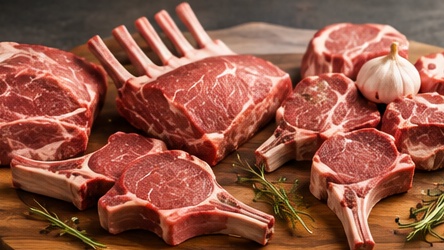
Lamb rack is tender and elegant. Season it simply and roast or grill it, then rest it before slicing into chops. It suits special dinners and gatherings.
Slow-cooking cuts
- Lamb neck: full of flavour and well suited to stews, braises and traditional slow-cooked dishes.
- Leg shank and foreshank: ideal for long, gentle cooking until the meat falls from the bone.
- Breast and flap: a versatile, richer cut that works well braised or slow-roasted.
Traditional cuts and offal
Lamb liver, tongue, head, feet and stomach are prized in many traditional cuisines. Liver cooks quickly, while tongue, feet and head need long, slow simmering.
Cooking lamb safely
Health Canada lists these safe internal temperatures for lamb pieces: 63°C (145°F) for medium-rare, 71°C (160°F) for medium and 77°C (170°F) for well done. Ground lamb should reach 71°C (160°F) (Health Canada, safe internal cooking temperatures).
Storing lamb
Raw lamb keeps 2 to 4 days in the fridge at 4°C (40°F) or lower, and 8 to 12 months in the freezer (Health Canada, safe food storage).
See all our halal lamb cuts.